I have two very vivid memories from graduate school that often come up when I’m struggling with parts of my job as a therapist. This was a time in my life when I was balancing everything that I was learning (while having undiagnosed ADHD, so for more information about that experience, go to this blog) and how I could actually apply it to the populations I wanted to work with once I could see clients.

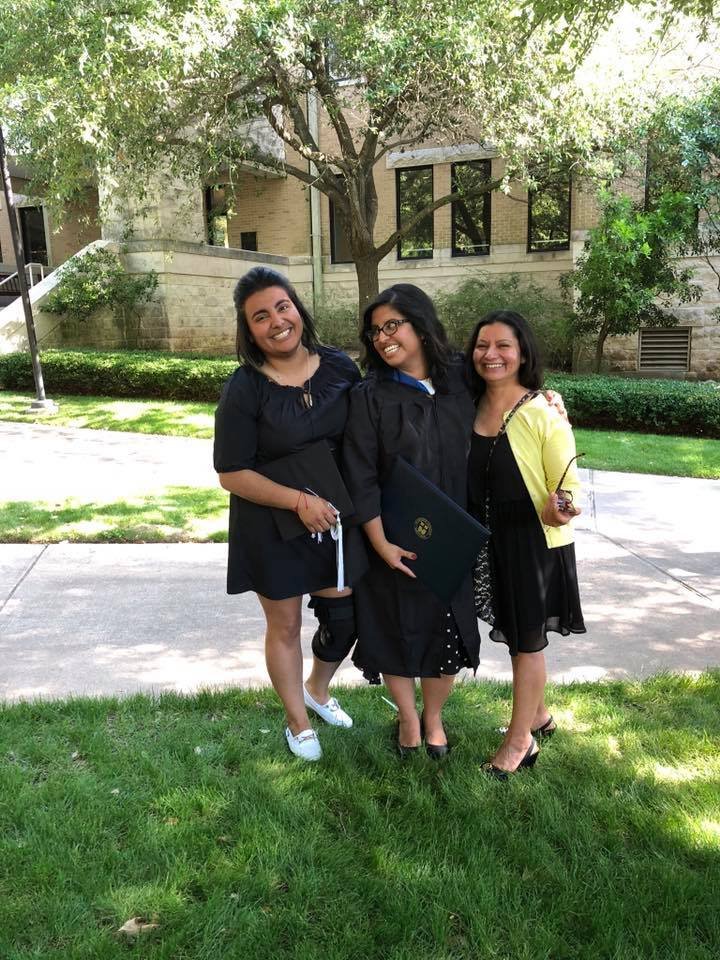
Paola celebrating graduation day with her sister, Michelle
For those who aren’t clinicians, we have a term called “self-of-the-therapist,” which is all about who we are as people and how we show up in and out of the therapy space. It’s about understanding ourselves and our social positioning, and how that impacts the way we work.
So, keeping all of that in mind, including my ADHD experience, picture me eager to learn in the classroom during the following two situations:
Learning from a white male professor (A) during a 3-hour evening course as the 2016 election votes are coming in. While I’m paying attention, I’m also refreshing my phone so I can stay up to date. Since I wasn’t the only one checking, the professor decided to say, “It’s okay to not check so often. Nothing is going to happen or change. It’s like any other election.”
Learning from a white male professor (B) while he shared a case study with a lot of drama and deceit. While I’m paying attention, my face was very expressive (as it often is). He looked right at me and pointed while he said humorously, “You have to control your face!”
Neither sat right with me. I won’t go into the power dynamic or the hierarchy that goes into play between a professor and student, a clinical supervisor and supervisee, or between a white man and a woman of color. I don’t have the time or energy.
Here’s the issue and my perspective on it all. Both statements came from the most privileged and uninformed space, even if they had good intentions. And to be clear, I like these professors and learned quite a bit, but that knowledge crashes and burns when someone’s identity and fears are dismissed, unacknowledged, or given no thought.
Did it not occur to professor A that I was worried about my safety as a brown woman?
Did it not occur to professor A what it means to be a minority while a man running for president was standing on a campaign where hate and exclusion of the “othered” was prioritized?
Did it not occur to professor B that we are humans first, and if we feel our client’s (insert boundary or limit here) was disrespected, then we’ll have a reaction?
Did it not occur to both professors that a brown woman in this country is often oppressed, minimized, and monitored in every white-dominated space?
Did it not occur to professor B that being told to control my face was something I experienced every day?
Did it not occur to either of these professors that their words are impactful?
Those two interactions are just tiny glimpses of how easy it is for those in power to follow a path that has been perpetuated so long that they can’t even consider an alternate reality where my lived experience matters. I’m part of an education system that has prioritized Western ideas and ways of life, so every day I make choices that put our clients first, whether that’s by sharing bilingual content, speaking up about issues that matter, or having reactions like any human being would during sessions. It’s challenging being part of a system that wasn’t created for people like me, but there are so many ways in which we can choose to show up authentically.
If only my professors knew how often I curse (every day, probably every session), or how often I’ve expressed emotions with my clients. If they only knew how comfortable I am with checking in on my clients’ experiences with the current political climate (also every day, every session). I can only imagine how unprofessional those professors would think I am.
Ma with her two bilingual therapist daughters
I say this to my clients, my peers, students, and often non-clinicians: WE (as therapists) ARE NOT NEUTRAL OR BLANK SLATES. Pretending to be is harmful and completely misses the point of being in this field. Our work is relational in nature, and to dismiss the impact of the political climate only perpetuates the isolation people often feel and, in turn, retraumatizes the very people you’re trying to help.
Our stance at Ortiz Therapy Group has always been the same. It’s in our mission, our blogs, our resources, and our social media. If and when we don’t have the bandwidth to create new content, we share the work of many dedicated Black, Brown, and Indigenous content creators because we value their voices.
So, every now and then, I like to make it clear and remind others where I stand and what OTG stands for:
Black Lives Matter. LGBTQIA+ Rights Matter. We demand a free Gaza, Iran, Congo, and every other country that has been impacted by the actions of this country. Womxn’s Rights Matter. Reproductive Rights Matter. No human is illegal on stolen land. Abolish ICE.
Tengo dos recuerdos muy vívidos de mis estudios de posgrado que a menudo me vienen a la mente cuando me enfrento a dificultades en mi trabajo como terapeuta. Fue una época de mi vida en la que intentaba compaginar todo lo que estaba aprendiendo (mientras padecía TDAH sin diagnosticar; para más información sobre esa experiencia, consulten este blog) y cómo podía aplicarlo a las poblaciones con las que quería trabajar una vez que pudiera atender a pacientes.
Para quienes no son terapeutas, existe un término llamado "el yo del terapeuta", que se refiere a quiénes somos como personas y cómo nos comportamos dentro y fuera del espacio terapéutico. Se trata de comprendernos a nosotros mismos y nuestra posición social, y cómo esto influye en nuestra forma de trabajar.
Así que, teniendo todo esto en cuenta, incluida mi experiencia con el TDAH, imagínenme, con muchas ganas de aprender, en clase durante las dos situaciones siguientes:
Estaba en una clase nocturna de tres horas con un profesor blanco (A) mientras se contaban los votos de las elecciones de 2016. Aunque prestaba atención, también actualizaba constantemente mi teléfono para mantenerme al día. Como no era la única que lo hacía, el profesor dijo: "Está bien no revisar el teléfono tan a menudo. No va a pasar nada ni va a cambiar nada. Es como cualquier otra elección".
En otra ocasión, estaba en clase con otro profesor blanco (B) que compartía un estudio de caso lleno de drama y engaños. Mientras prestaba atención, mi rostro era muy expresivo (como suele serlo). Me miró directamente, me señaló y dijo con humor: "¡Tienes que controlar tu cara!".
Ninguna de las dos situaciones me pareció correcta. No voy a entrar en la dinámica de poder ni en la jerarquía que se establece entre un profesor y un estudiante, un supervisor clínico y su supervisado, o entre un hombre blanco y una mujer de color. No tengo ni el tiempo ni la energía.
Aquí está el problema y mi perspectiva al respecto. Ambas declaraciones provenían de una posición de privilegio y desconocimiento, incluso si tenían buenas intenciones. Y para que quede claro, aprecio a estos profesores y aprendí mucho de ellos, pero ese conocimiento pierde todo su valor cuando se ignoran, se desestiman o se pasan por alto la identidad y los miedos de una persona.
¿Acaso no se le ocurrió al profesor A que me preocupaba mi seguridad como mujer de color?
¿Acaso no se le ocurrió al profesor A lo que significa ser una minoría mientras un hombre que se postulaba a la presidencia basaba su campaña en el odio y la exclusión de las poblaciones marginadas?
¿Acaso no se le ocurrió al profesor B que somos seres humanos ante todo, y que si sentimos que se ha faltado al respeto a (inserte aquí el límite o la norma) de nuestro cliente, reaccionaremos?
¿Acaso no se les ocurrió a ambos profesores que una mujer de color en este país a menudo es oprimida, menospreciada y vigilada en cualquier espacio dominado por personas blancas?
¿Acaso no se le ocurrió al profesor B que me dijeran que controlara mis expresiones faciales era algo que experimentaba a diario?
¿Acaso no se les ocurrió a ninguno de estos profesores que sus palabras tienen un gran impacto?
Estas dos interacciones son solo pequeños ejemplos de lo fácil que les resulta a quienes ostentan el poder seguir un camino que se ha perpetuado durante tanto tiempo que ni siquiera pueden contemplar una realidad alternativa donde mi experiencia de vida sea relevante. Formo parte de un sistema educativo que ha priorizado las ideas y los estilos de vida occidentales, por lo que cada día tomo decisiones que priorizan a nuestros clientes, ya sea compartiendo contenido bilingüe, alzando la voz sobre temas importantes o reaccionando como cualquier ser humano lo haría durante las sesiones. Es un desafío formar parte de un sistema que no fue creado para personas como yo, pero existen muchas maneras en las que podemos elegir mostrarnos auténticamente.
Si mis profesores supieran cuántas veces uso groserías (probablemente todos los días, en cada sesión), o con qué frecuencia expreso mis emociones con mis clientes. Si supieran lo cómoda que me siento al preguntarles a mis clientes sobre sus experiencias con la situación política actual (también todos los días, en cada sesión). No me quiero ni imaginar lo poco profesional que me considerarían.
Les digo esto a mis clientes, a mis colegas, a mis estudiantes y a menudo a personas ajenas al ámbito clínico: NOSOTROS (como terapeutas) NO SOMOS NEUTRALES NI TABLAS RASAS. Fingir serlo es perjudicial y desvirtúa por completo el sentido de dedicarse a esta profesión. Nuestro trabajo es de naturaleza relacional y negar el impacto del contexto sociopolítico solo perpetúa el aislamiento que muchas personas sienten y, a su vez, revictimiza a quienes intentamos ayudar.
Nuestra postura en Ortiz Therapy Group siempre ha sido la misma. Está presente en nuestra misión, nuestros blogs, nuestros recursos y nuestras redes sociales. Cuando no tenemos la capacidad de crear contenido nuevo, compartimos el trabajo de muchos creadores de contenido con identidades interseccionales porque valoramos sus voces.
Por eso, de vez en cuando, me gusta dejar clara mi postura y recordar a los demás lo que representa OTG:
Black Lives Matter. Los derechos LGBTQIA+ importan. Exigimos una Gaza, un Irán, un Congo libres y la libertad de todos los demás países afectados por las acciones de este país. Los derechos de las mujeres importan. Los derechos reproductivos importan. Ningún ser humano es ilegal en tierras robadas. Abolición de ICE. O mejor aún, que se joda ICE.